
Searching for memorable climate dystopian sci fi books often dumps readers into repetitive Hollywood disaster tropes where giant tidal waves solve everything by chapter twenty. True ecological dystopias look far sharper and scarier: privatized river treaties, engineered calorie famines, rising flooded cities, and neighbors rebuilding community amid scorching drought. Start immediately with The Water Knife, Parable of the Sower, or Oryx and Crake.
While I assembled our comprehensive pillar on the best dystopian sci fi novels, I found from reading dozens of manuscripts and trade releases that climate collapse fiction now drives the sharpest speculative writing in publishing. Every novel ranked below pairs rigorous environmental world building with an honest ending verdict so you know whether a story concludes cleanly in one volume or spans a trilogy.
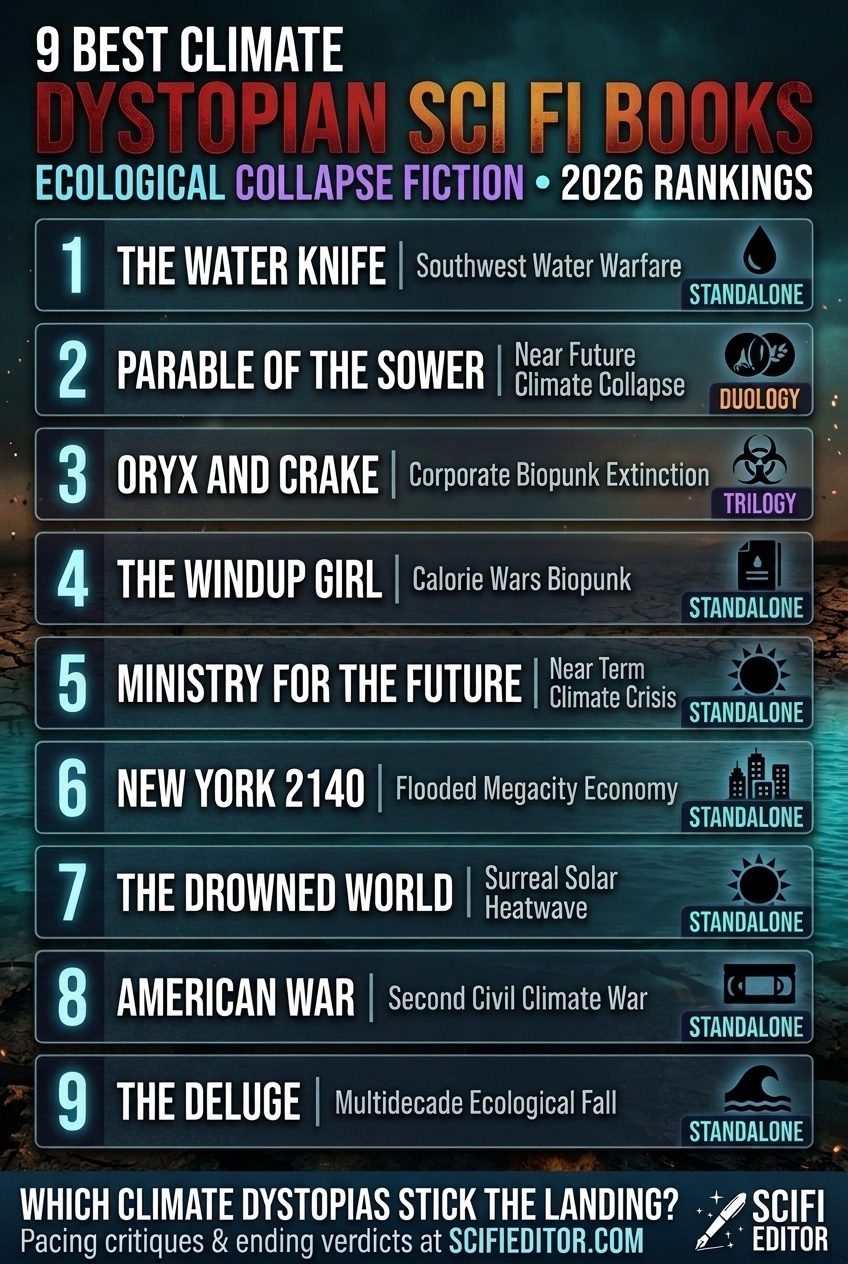
Quick Filter: Pick Your Climate Collapse Scenario
- Water Wars, Drought, and Near Future Civil Collapse: The Water Knife, Parable of the Sower, American War
- Biopunk Scarcity and Rising Ocean Cities: Oryx and Crake, The Windup Girl, New York 2140
- Global Policy Epics, Multi Decade Crisis, and Surreal Heat: The Ministry for the Future, The Drowned World, The Deluge
| Novel and Author | Climate Threat | Series Length | Pacing Profile | Ending Status |
| The Water Knife (Paolo Bacigalupi) | Southwest Water Warfare | Standalone (371 Pages) | Ruthless Thriller | Complete Standalone |
| Parable of the Sower (Octavia E. Butler) | Near Future Collapse | 2 Books (345 Pages Book 1) | Gritty Road Survival | Unfinished Trilogy (Book 2 Resolves Arc) |
| Oryx and Crake (Margaret Atwood) | Corporate Biopunk Extinction | 3 Books (Complete) | Layered Dual Timeline | Complete Trilogy |
| The Windup Girl (Paolo Bacigalupi) | Calorie Wars Biopunk | Standalone (359 Pages) | Dense Atmospheric Noir | Complete Standalone |
| The Ministry for the Future (Kim Stanley Robinson) | Near Term Climate Crisis | Standalone (563 Pages) | Policy and Thriller Mix | Complete Standalone |
| New York 2140 (Kim Stanley Robinson) | Flooded Megacity Economy | Standalone (613 Pages) | Ensemble Urban Mystery | Complete Standalone |
| The Drowned World (J. G. Ballard) | Surreal Solar Heatwave | Standalone (198 Pages) | Hypnotic Psychological | Complete Standalone |
| American War (Omar El Akkad) | Second Civil Climate War | Standalone (333 Pages) | Devastating Family Epic | Complete Standalone |
| The Deluge (Stephen Markley) | Multidecade Ecological Fall | Standalone (896 Pages) | Sweeping Ensemble Realism | Complete Standalone |
1. The Water Knife by Paolo Bacigalupi (2015)
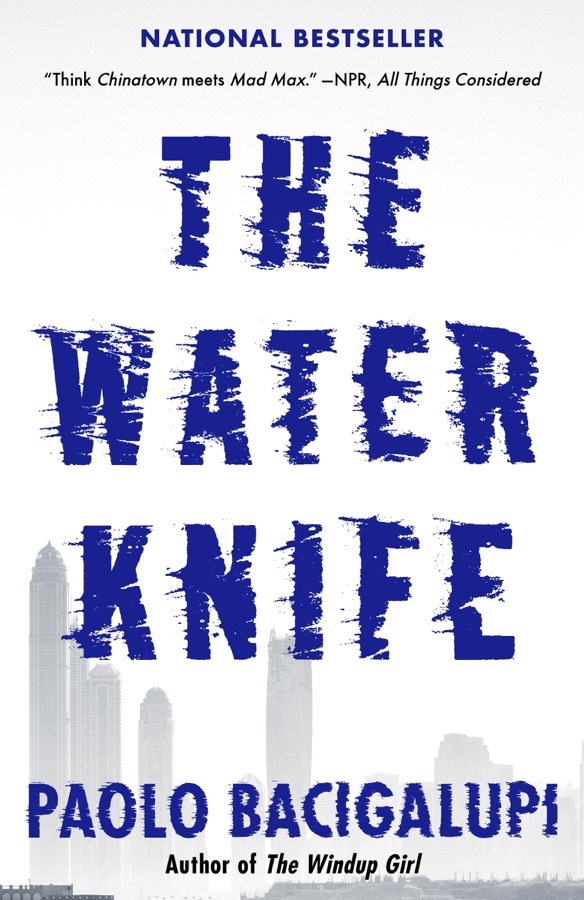
Instead of jumping straight to deserted wastelands, Paolo Bacigalupi captures the terrifying interim decades when luxury desert arcologies stand beside collapsing refugee camps as states close borders over shrinking rivers. Having read real municipal water reporting alongside Bacigalupi’s thriller, I found his depiction of Phoenix checkpoint desperation disturbingly plausible.
- Ending Verdict: Complete standalone thriller. Every character arc and water treaty battle converges cleanly in one ruthless finale with no sequel needed.
- The Premise: Las Vegas corporate assassin Angel Velasquez hunts rumored senior Colorado River water rights documents inside scorching, dust choked Phoenix alongside a hardened reporter and a desperate Texas migrant.
- Pacing and Editorial Critique: Fast, brutal, and morally uncompromising across three rotating perspectives that turn climate scarcity into an elite crime thriller.
2. Parable of the Sower by Octavia E. Butler (1993)

Octavia E. Butler wrote this prophetic survival journal more than thirty years ago, yet its depiction of privatized cities, wildfires, and extreme wealth inequality feels startlingly contemporary.
- Ending Verdict: Important series note: Butler originally envisioned a third Earthseed volume (Parable of the Trickster) that went unwritten before her passing, yet Book 1 stands remarkably strong alone and Parable of the Talents gives Lauren Olamina’s main arc clear resolution.
- The Premise: When desperate arsonists overrun her walled California cul de sac amid chronic drought and civic collapse, hyperempathetic eighteen year old Lauren Olamina hikes north with a growing band of survivors guided by her Earthseed survival philosophy.
- Pacing and Editorial Critique: Sparse diary entries maintain tight psychological realism, turning every mile along broken highways into agonizing moral suspense.
3. Oryx and Crake by Margaret Atwood (2003)

Pairing coastal heat collapse with reckless genetic engineering, Margaret Atwood shows what happens when unaccountable pharmaceutical compounds treat living ecosystems as expendable product lines.
- Ending Verdict: Complete trilogy. While Book 1 ends on an intentional tense cliffhanger, The Year of the Flood and MaddAddam answer every mystery and resolve the saga cleanly.
- The Premise: Alone in a scorched post collapse coastal world teeming with spliced animals, a survivor named Snowman guards a peaceful bioengineered human species while reliving the corporate arrogance that doomed civilization.
- Pacing and Editorial Critique: Alternates deftly between Snowman’s harsh survival struggle and biting satire of walled biotech suburbs before accelerating sharply in the final act.
4. The Windup Girl by Paolo Bacigalupi (2009)
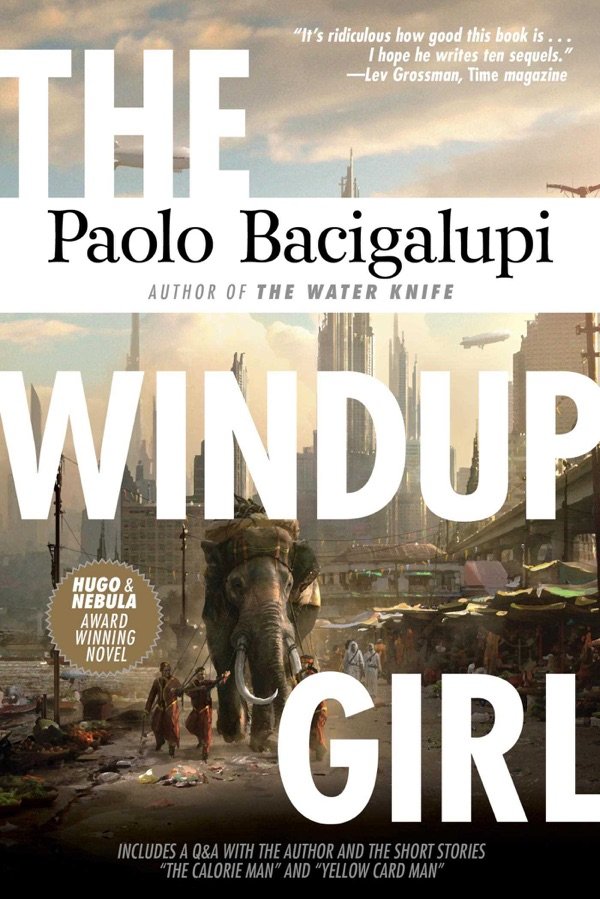
Winner of both the Hugo and Nebula Awards, The Windup Girl shifts climate dystopia to a twenty third century Bangkok protected by massive seawall pumps after rising oceans and engineered crop blights shattered fossil fuel economies. When I reread Emiko’s Bangkok street chapters, I still marvel at how tangibly Bacigalupi constructs calorie scarcity without slowing down his espionage plot.
- Ending Verdict: Complete standalone novel. All political intrigue, agricultural conspiracy, and Emiko’s survival resolve cleanly in a single unforgettable volume.
- The Premise: In a future where calories literally serve as currency and global agribusiness giants hoard surviving unblighted seeds, a covert corporate hunter stalks Thailand’s secret seedbank while a genetically engineered New Person named Emiko fights for freedom.
- Pacing and Editorial Critique: Rich, humid, and deliberate early on as you absorb five overlapping viewpoints before political factions ignite into violent revolution.
5. The Ministry for the Future by Kim Stanley Robinson (2020)
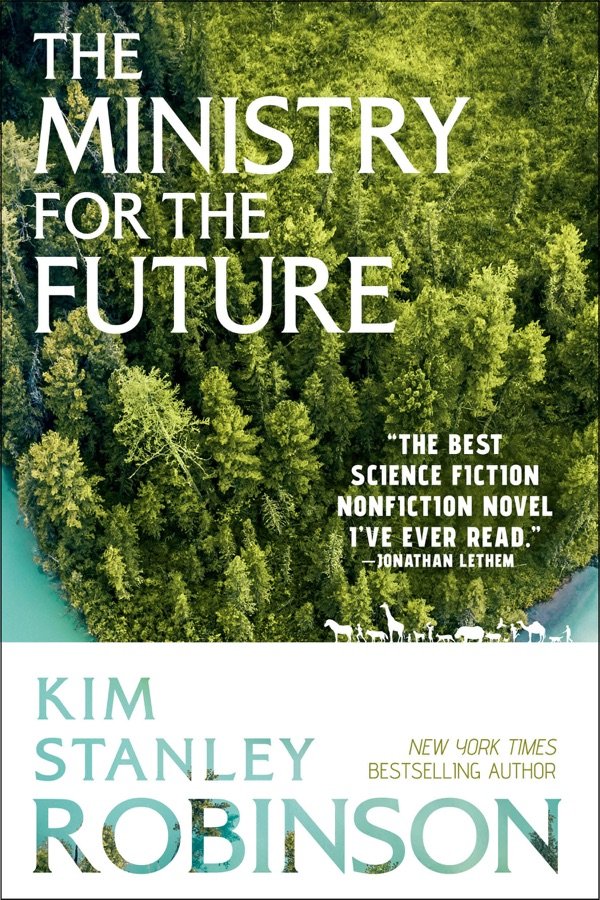
Opening with one of the most harrowing heatwave chapters in modern literature, Kim Stanley Robinson traces both the geopolitical breakdown and desperate radical interventions required to keep Earth habitable.
- Ending Verdict: Complete standalone novel. It tracks an entire multi decade arc from catastrophe to fragile stabilization without sequel cliffhangers.
- The Premise: Established under the Paris Agreement to advocate for unborn generations, a Zurich diplomatic agency wrestles with carbon currencies, geoengineering, and covert eco sabotage after a catastrophic wet bulb heatwave kills millions in India.
- Pacing and Editorial Critique: Blends vivid eyewitness vignettes, economic essays, and clandestine thriller plots; expect nonfiction style interludes alongside intense human drama.
6. New York 2140 by Kim Stanley Robinson (2017)
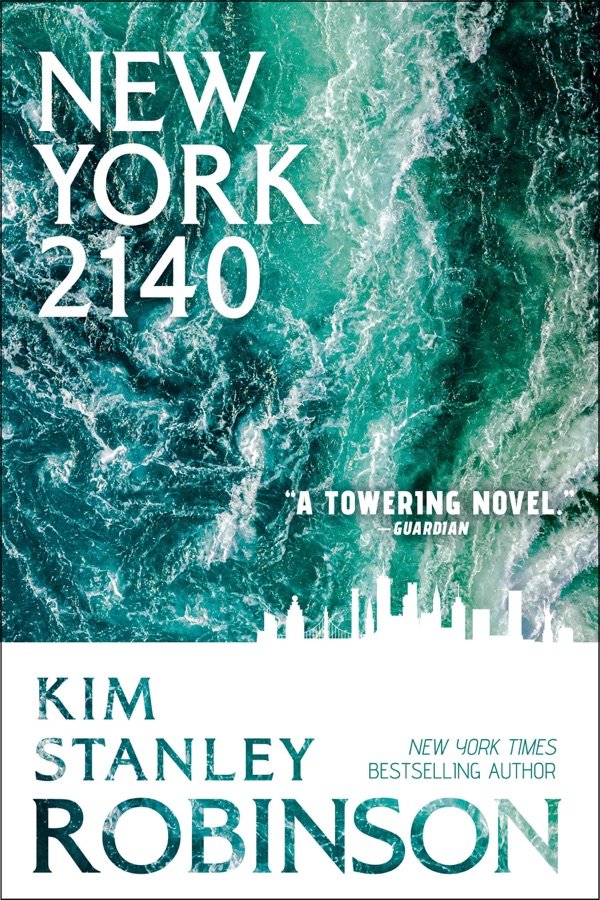
Unlike bleak wastelands where cities vanish into dust, New York 2140 imagines a drowned, intertidal Manhattan turned into a buzzing SuperVenice where skybridges connect submerged skyscrapers and real estate speculators hunt sunken wealth.
- Ending Verdict: Complete standalone novel. Every co op tenant plot, sunken treasure hunt, and financial strike wraps up cleanly at the close.
- The Premise: Following two massive fifty foot sea level surges, residents of the flooded Met Life Tower co op fight predatory hedge fund vultures while searching for lost shipwrecked gold beneath Manhattan’s canals.
- Pacing and Editorial Critique: Playful, sprawling, and deeply interested in housing politics and finance, trading grim horror for scrappy urban resilience.
7. The Drowned World by J. G. Ballard (1962)
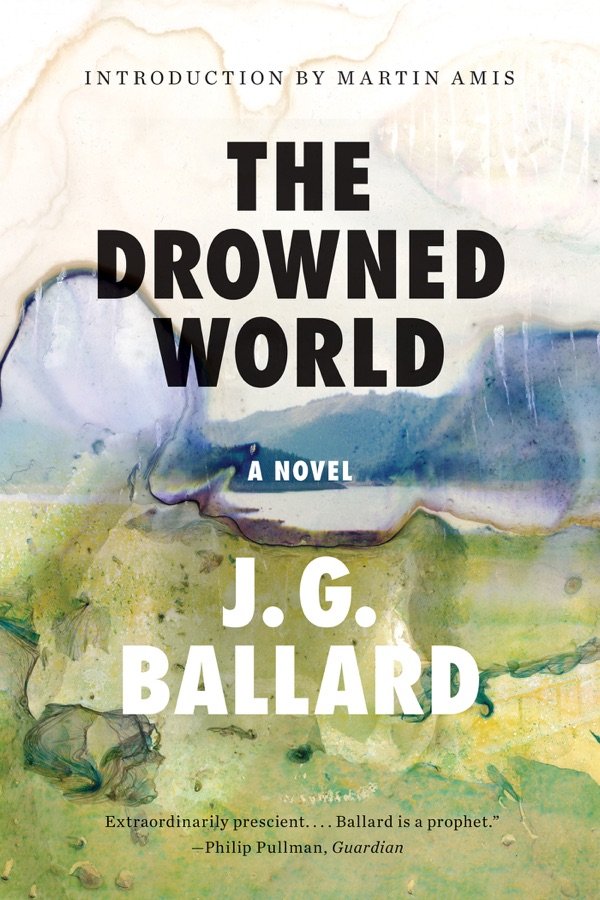
Written over sixty years ago, J. G. Ballard’s hypnotic classic rejects heroic survival tropes entirely, exploring how extreme solar radiation and flooded prehistoric jungles awaken primal instincts inside human minds.
- Ending Verdict: Complete standalone classic. Short, haunting, and philosophically complete under 200 pages.
- The Premise: When melted ice caps turn European capitals into sweltering tropical lagoons, biologist Robert Kerans joins a scientific survey team mapping submerged London while strange shared dreams pull everyone southward.
- Pacing and Editorial Critique: Surreal, atmospheric, and deeply literary; read it for eerie psychological immersion rather than fast action plots.
8. American War by Omar El Akkad (2017)
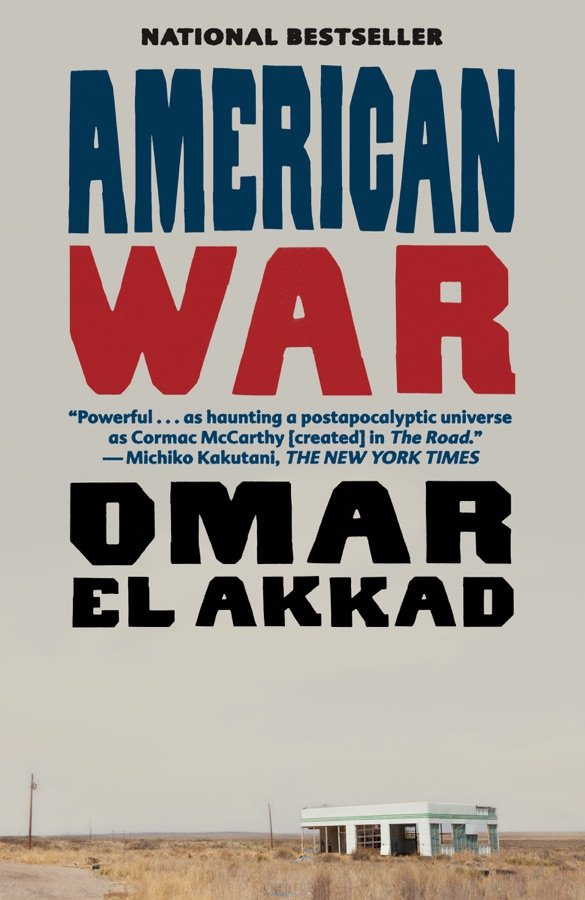
Set across a devastated late twenty first century United States fractured by coastal flooding and fossil fuel bans, Omar El Akkad traces how ecological desperation mutates into generational guerrilla war.
- Ending Verdict: Complete standalone novel. Sarat Chestnut’s tragic wartime transformation reaches full, devastating historical closure in one book.
- The Premise: After northern states outlaw oil and southern provinces secede in 2074, young Louisiana girl Sarat Chestnut grows up inside flooded displacement camps shaped by brutal drone strikes, torture, and radical vengeance.
- Pacing and Editorial Critique: Measured, heartbreaking, and intensely realistic war fiction grounded in journalistic observation rather than flashy sci fi gadgets.
9. The Deluge by Stephen Markley (2023)
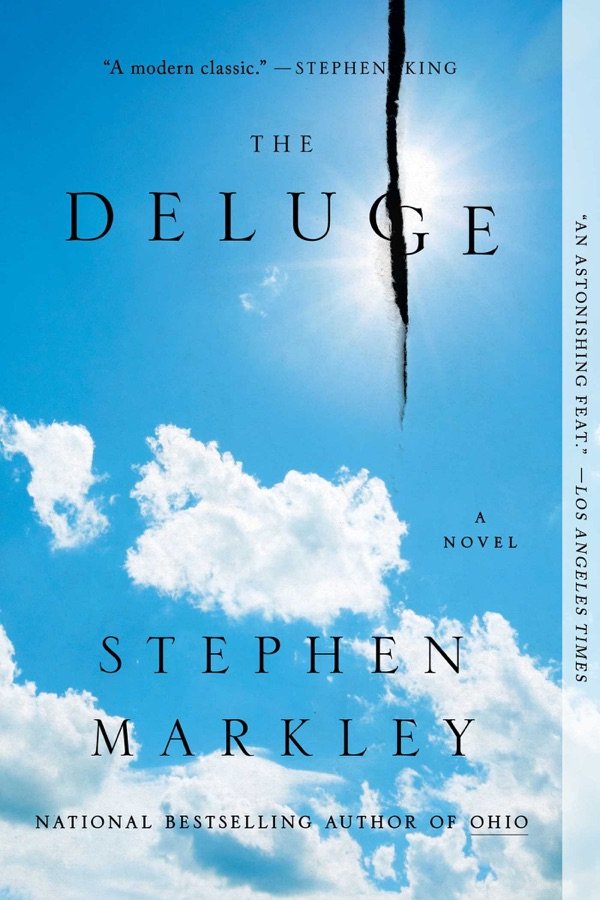
Spanning nearly three decades from the 2010s into the fractured 2040s, The Deluge delivers the most sweeping, realistic modern American chronicle of accelerating fires, extreme storms, and fracturing politics. I paced myself across Markley’s massive ensemble cast over an entire weekend, and my margin notes barely covered how prophetically the policy gridlock feels real.
- Ending Verdict: Complete standalone epic. Despite its monumental nearly 900 page span, every scientist, addict, politician, and eco saboteur reaches a definitive reckoning.
- The Premise: As compounding drought, coastal storms, and political gridlock push the United States toward authoritarian breakdown, an intertwined cast of climate researchers, activists, and corporate operatives battle to alter the tipping point.
- Pacing and Editorial Critique: Ambitious and densely layered; the early years build slow dread before culminating in gripping political and environmental tension.
Frequently Asked Questions
What is cli fi or climate dystopian fiction?
Climate fiction, often shortened to cli fi, is speculative literature centered on ecological collapse, extreme heatwaves, rising sea levels, and resource warfare. Unlike distant alien invasions, climate dystopian sci fi books ground human conflict inside realistic environmental breakdown and political scarcity.
What are the best climate dystopian sci fi books to start with?
The Water Knife by Paolo Bacigalupi is the fastest thriller entry point, while Parable of the Sower by Octavia E. Butler delivers unforgettable near future survival realism. Readers wanting big picture global solutions and policy drama often start with The Ministry for the Future by Kim Stanley Robinson.
Is climate fiction always apocalyptic or dystopian?
No, while many prominent titles examine bleak societal breakdown, branches like solarpunk emphasize cooperative clean energy and ecological repair. Even dark picks like New York 2140 and The Ministry for the Future weave community adaptation alongside severe environmental crises, complementing our broader ranking of the best dystopian sci fi novels.
What are some classic older examples of climate fiction?
Classic precursors written decades before the term cli fi appeared include The Drowned World (1962) and The Drought (1964) by J. G. Ballard, alongside Ursula K. Le Guin’s The Word for World Is Forest (1972). Each explored ecological hubris and planetary collapse long before modern climate thrillers became mainstream.